
A Deep Dive into Advanced Wheel Alignment
For many drivers, wheel alignment is a simple check-box item on a maintenance list. Yet, at the advanced level of automotive engineering and service, it is recognised as a complex geometrical calibration that dictates a vehicle's dynamics, handling precision, and component longevity. As vehicles evolve with sophisticated suspension systems, performance tyres, and integrated Advanced Driver-Assistance Systems (ADAS), the need for high-precision alignment has become more critical than ever.
This article delves beyond the simple definitions of camber, caster, and toe to explore the nuanced considerations and technologies that define modern, advanced wheel alignment.
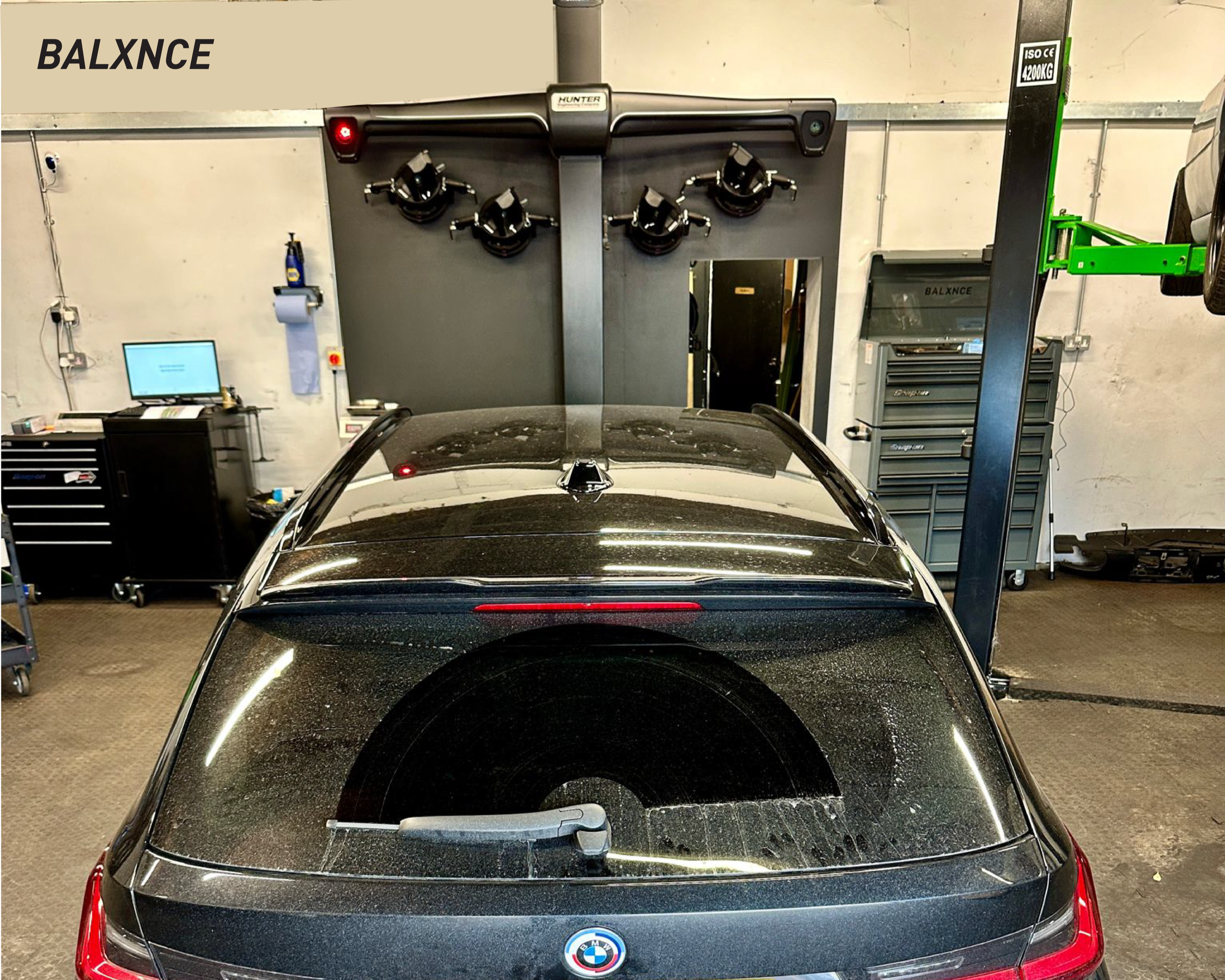
Hunter Wheel Alignment at BALXNCE, London UK
The Dynamic Interplay of Alignment Angles
While a basic alignment focuses on static measurements, true performance requires understanding how these angles interact and change under dynamic driving conditions (acceleration, braking, and cornering).
1. Camber: The TYRe-Contact Strategist
Camber is the vertical tilt of the wheel.
Negative Camber: The top of the wheel tilts inward. This is common on performance cars because during a turn, the vehicle's weight shifts outward, causing the outside wheel to lean slightly. Negative camber ensures the maximum tyre tread remains in contact with the road under load, maximising grip.
Positive Camber: The top of the wheel tilts outward. This is rare in modern cars but can be found in some heavy-duty vehicles to compensate for heavy loads that would otherwise push the wheels into excessive negative camber.
Advanced Consideration: Aggressive negative camber for track use increases cornering grip but leads to accelerated inner-tire wear during straight-line driving. The optimal angle is a delicate compromise between cornering performance and tyre longevity.
2. Caster: The Stability and Steering Effort Control
Caster is the forward or backward angle of the steering pivot point.
Positive Caster: The steering axis is tilted backwards (towards the driver). This is desired because it helps the wheel self-centre after a turn (the "shopping cart caster" effect) and enhances high-speed stability. It also increases the effective negative camber on the outside wheel when turning, further aiding cornering grip.
Negative Caster: The steering axis is tilted forward. This makes steering lighter but unstable.
Advanced Consideration: High-performance vehicles often utilise higher degrees of positive caster to improve straight-line stability and dynamic camber, though this comes with the trade-off of slightly increased steering effort.
3. Toe: The Tire-Wear and Steering-Response Driver
Toe is the parallel relationship of the wheels when viewed from above.
Toe-In: The front edges of the wheels are closer together than the rear edges. This counters the forces that try to spread the wheels apart when driving (due to rolling resistance and suspension geometry), stabilising the vehicle. Typically used on the front and rear of road cars.
Toe-Out: The front edges of the wheels are further apart. This can improve initial turn-in response but increases tyre scrub and requires constant steering correction on the highway. Typically used on the front of track or fast road cars.
Advanced Consideration: A common technique, especially in front-wheel-drive cars, is to set the alignment to zero toe or a minute amount of toe-out at the front and a slight toe-in at the rear. The rear toe is critical for the vehicle's "thrust angle," which dictates where the vehicle is truly aimed. An incorrect thrust angle causes the vehicle to "dog-track" and necessitates constant steering input.
The Evolution: From Racks to Imaging
The tools used to measure alignment have evolved from simple gauges to sophisticated computer vision systems. Our Hunter HawkEye utilises high-resolution digital cameras and targets to create a real-time, 3D model of the suspension geometry. It measures angles with minimal runout compensation, provides live, dynamic feedback, and integrates OEM specs seamlessly. It’s the current industry standard for precision.
Wheel Alignment and Vehicle Control Systems
In modern vehicles, the relationship between wheel alignment and electronic control systems is inseparable:
ADAS Integration: Cameras and radar sensors used for systems like Lane Keep Assist (LKA) and Adaptive Cruise Control (ACC) are mounted relative to the body of the car. If the wheel alignment (and therefore the thrust angle) is off, the vehicle's electronic "eye" is aimed incorrectly. This necessitates a post-alignment ADAS Calibration to re-aim the sensors to the correct vehicle centerline.
Electronic Stability Control (ESC): ESC systems rely on accurate steering angle sensors to understand the driver's input. Severe misalignment can trick the ESC system into thinking the steering wheel is centred when the wheels are slightly turned, potentially leading to incorrect or delayed stability interventions.
Tire Pressure Monitoring System (TPMS): While not directly linked to alignment, uneven tyre wear caused by misalignment can lead to premature tyre failure, which impacts the TPMS system's ability to maintain safe conditions.
Conclusion: Alignment as Performance Tuning
For owners of high-performance, luxury, or ADAS-equipped vehicles, wheel alignment is far more than a simple adjustment. It is a critical performance tuning utilisng state-of-the-art 3D imaging equipment, a skilled technician can dial in the precise geometry required to optimise tyre contact patch under dynamic load, ensure the reliable function of safety systems, and provide the driver with the responsive, predictable handling the vehicle was engineered to deliver.
GET IN TOUCH FOR A PRECISE WHEEL ALIGNMENT TODAY.