
Does wheel alignment matter?
It's easy to overlook the subtle complexities that keep your car running smoothly. We think about oil changes, tire rotations, and brake pads, but how often do you consider your wheel alignment? Often an unsung hero of vehicle maintenance, proper wheel alignment plays a critical role in your car's safety, performance, and longevity. Ignoring it can lead to a host of problems that cost you money and compromise your driving experience.
What is Wheel Alignment?
At its core, wheel alignment refers to the adjustment of your car's suspension system to ensure that all four wheels are parallel to each other and perpendicular to the ground. It's not about adjusting the wheels themselves, but rather the angles of the steering and suspension components. These angles – primarily camber, caster, and toe – are precisely calibrated by the manufacturer for optimal handling and tire wear.
Camber: This is the inward or outward tilt of the wheel when viewed from the front of the car.
Caster: This angle refers to the forward or backward tilt of the steering axis when viewed from the side. It affects steering stability.
Toe: This is the most critical alignment angle for tire wear and refers to how much the wheels turn inward or outward when viewed from above.
Even a slight deviation from these factory specifications can have significant consequences.
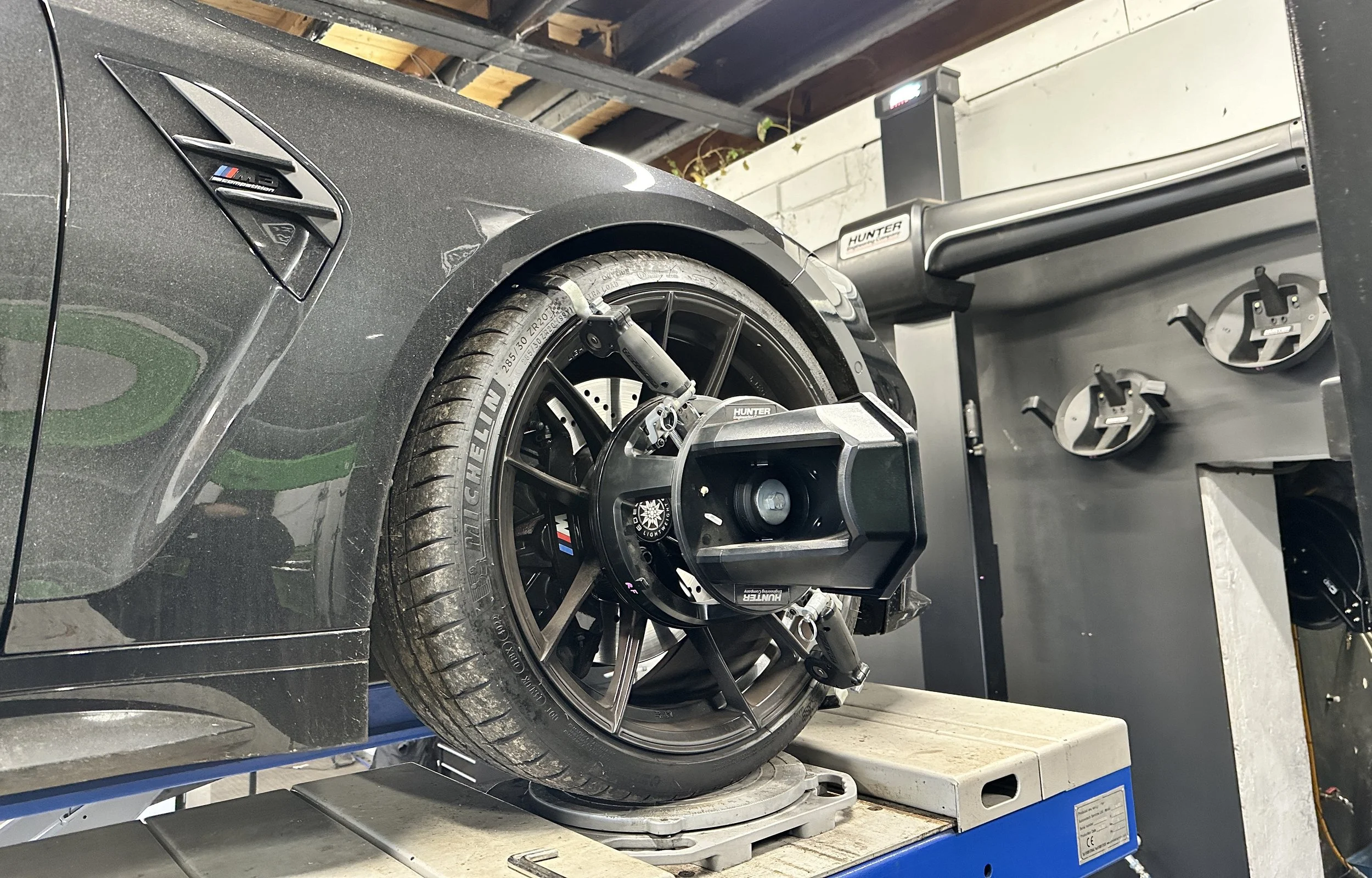
BMW M3 G80 IN FOR GEOMETRY ALIGNMENT AT OUR LONDON WORKSHOP
The Hidden Costs of Misalignment
While you might not immediately notice a subtle misalignment, your car will certainly feel the effects over time. Here are the key reasons why wheel alignment matters:
Extended Tire Life: This is perhaps the most significant benefit. When wheels are misaligned, tyres drag or scrub against the road surface instead of rolling smoothly. This leads to uneven and accelerated tyre wear, drastically reducing their lifespan. You'll find yourself replacing tyres much sooner than necessary, which can be a significant expense.
Improved Fuel Efficiency: When tyres aren't rolling straight, the engine has to work harder to propel the vehicle. This increased resistance translates directly into poorer fuel economy. While the difference might seem small per trip, it adds up significantly over time, costing you more at the pump.
Enhanced Safety and Handling: A properly aligned vehicle handles predictably and responsively. If your alignment is off, you might notice your car pulling to one side, a crooked steering wheel even when driving straight, or vibrations in the steering wheel. This can make the car feel unstable, especially at higher speeds or during emergency manoeuvres, compromising your safety and that of your passengers.
Reduced Wear on Suspension Components: Misalignment places undue stress on various parts of your suspension system, including ball joints, tie rods, and shock absorbers. Over time, this can accelerate their wear and tear, leading to costly repairs down the road.
When Should You Get an Alignment?
Several signs indicate it's time to get your alignment checked:
Uneven or rapid tyre wear: This is often the most common and visible sign.
The car pulls to one side: You have to constantly correct the steering wheel to keep the car going straight.
A crooked steering wheel: Even when driving straight, your steering wheel isn't centred.
Vibrations in the steering wheel or through the car.
After hitting a significant pothole or curb.
After replacing suspension components.
Whenever you get new tyres: This is a great preventative measure to ensure your new tyres wear evenly from the start.
Most manufacturers recommend checking your alignment every 10,000 to 15,000 miles or at least once a year.
The Alignment Process
Our professional alignment service involves using specialised equipment to measure and adjust the angles of your wheels. Modern alignment machines use lasers and computer imaging to provide precise readings and guide technicians in making the necessary adjustments. It's a precise process that requires trained expertise.
The next time you're thinking about your car's maintenance, don't forget the silent guardian of your tyres and handling: wheel alignment. A small investment in alignment can save you significant money on tyres and repairs, while ensuring a safer, smoother, and more enjoyable driving experience.